If you've changed your dog's food in the last few weeks and the garden has become a much busier place, this is usually normal - and can be a good sign. More frequent, well-formed stools are an expected response to a change in fibre. Loose, watery or bloody stools are a different matter, and mean you should slow down or speak to your vet.
It's one of the most common things new customers write to us about, and it's almost always the thing that makes people worry they've made a mistake. Usually they haven't. Here's what's actually happening, what a normal adjustment looks like, and the specific signs that mean something else is going on.
Why does a change in food affect my dog's stools?
Three things change at once when you switch food, and each one affects the other end.
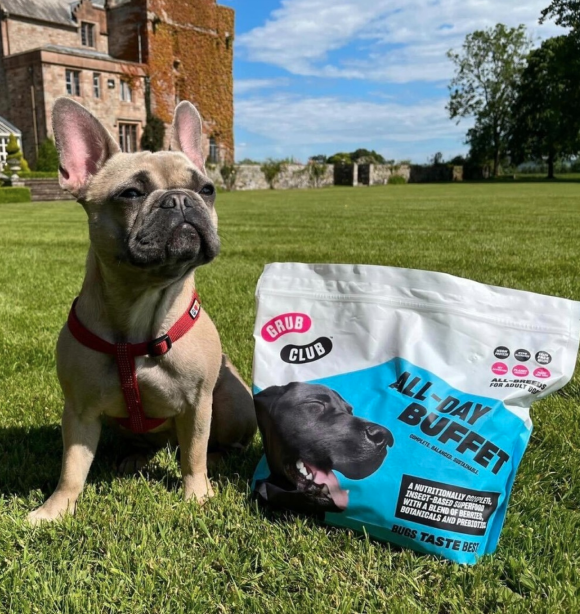
Fibre. Some types of fibre can draw water into the bowel and add bulk to stools and may mean your dog passes stools more frequently. All-Day Buffet contains 4% crude fibre and Good Gut Grub 4.5% - noticeably more than a typical raw diet, and more than many kibbles. If you've come from raw, this can be the single biggest reason for the change you're seeing.
The microbiome. The bacterial population in your dog's gut is adapted to whatever they've been eating. Give it a new protein or fibre profile and it can sometimes take a couple of weeks for it to adjust, with some changes happening within the first few days and others taking a few weeks to stabilise. During this window, your dog may have a little wind, which often settles.
What does a normal dog food transition look like?
In most dogs:
• You may see some extra daily movements in the first week or so, and especially if they are changing from a type of food with a very different fibre profile - like raw, for example. .
• Stools that are formed: you should be able to pick them up cleanly. A modest increase in volume or frequency can be normal. Loose or watery stools are a different matter.
• Gradually settling over the following days to weeks.
• More wind, especially during the early stages of transitioning as the gut adjusts to the new food.
Regular, formed bowel movements are generally a sign of a gastrointestinal tract that's working. A change in fibre can sometimes increase stool volume or frequency, without necessarily being a cause for concern.
When should I worry?
Speak to your vet, and slow the transition right down, if you see any of the following:
• Watery or consistently loose stools that don't firm up within a few days of slowing the change.
• Blood or mucus in the stools.
• Straining, or obvious discomfort when passing a stool.
• Frequency or stool volume continuing to increase, rather than settling.
• Unintentional weight loss Some weight change is expected when calorie density shifts: All-Day Buffet is 354 kcal per 100g, so if your previous food was more calorie-dense you'll need to feed more grams for the same calories.
• Vomiting, lethargy or a dog that seems unwell. A food transition should be an uneventful process. If your dog seems unwell, speak to your vet rather than simply continuing or adjusting the transition .
Check out our article: Dog Poop - The Ultimate Breakdown for a deep dive on what your dog's stools might tell you about their health.
How do I switch food without upsetting their stomach?
The fix is almost always the same: go slower than you think you need to.
1. Drop back, don't push on. If you notice your dog's stools are becoming loose, it may be worth slowing down the transition or stepping back to the previous proportion, rather than continuing to increase the amount of new food.
2. Let your dog guide the pace. Some dogs benefit from taking a little more time and having a longer transition, particularly if they have a history of a sensitive stomach. There isn't one transition speed that suits every dog, so let their response guide you.
3. Feed to a schedule rather than leaving food down all day. Feeding two or more measured meals daily can help spread the food intake and make it easier for some dogs to process.
4. Check the amount. Overfeeding during a transition is common, because people add the new food on top rather than swapping a portion of it out. The total should stay the same.
5. Keep everything else the same. New treats, new chews and a new food all at once make it impossible to tell what caused what.
Check out our article for more details about What to Expect During the Transition for dogs with Sensitive Stomachs.
Does insect protein cause loose stools?
No. It's worth addressing directly, because it comes up whenever insect-based food is discussed online.
Black soldier fly larvae are highly digestible. In a 28-day feeding trial of 56 adult dogs published in the Journal of Animal Science, apparent total tract digestibility of protein ran between 87.9% and 89.6%, and of fat between 96.0% and 96.7%, at insect meal inclusion levels of 5%, 10% and 20% — none significantly different from a control diet containing no insect protein (Freel et al., 2021).
Stool quality held up alongside it. Faecal scores across every group averaged 3.3 on a five-point scale, where 3 is moist and formed and 4 is well formed, and blood chemistry stayed within normal limits throughout. Dogs settled on an insect diet produce stools no different from dogs on a conventional one.
That is what locates the problem. If the protein itself were causing looser or more frequent stools, four weeks of feeding it at 20% inclusion would have shown it. What owners are usually describing is a transition effect rather than a property of the protein, and the same thing happens moving between any two foods with different fibre levels.
When should you see your vet if you're doing an elimination diet?
If your dog has watery stools lasting more than 48 hours, blood in their stool, vomiting, straining, lethargy or any unexplained weight loss, these signs warrant a veterinary appointment rather than simply adjusting their food. Mucus in the stool can be indicative of irritation or inflammation in the bowel and is also worth discussing with your vet.
This article describes some of the digestive changes that can occur when changing diets, but every dog is different. Persistent or concerning digestive signs should always be assessed by your vet rather than assumed to be a normal response to a new food.
References:
Freel TA, McComb A, Koutsos EA. Digestibility and safety of dry black soldier fly larvae meal and black soldier fly larvae oil in dogs. J Anim Sci. 2021;99(3):skab047. doi:10.1093/jas/skab047