Food can't treat an ear infection, but it can matter when infections keep coming back. If your dog's ear infections clear with treatment and return within weeks, the ear is often not the real problem. Recurring ear infections are a common sign of an underlying allergy, and they are easy to miss, because each infection gets treated successfully and everyone moves on.
If a food allergy is behind it, finding and removing the trigger can mean the infections have less reason to keep returning. This article covers why allergies show up in the ears, the signs to look for, what else it could be, and how a properly run diet trial works.
How common are ear infections in dogs?
Very common. In a UK study of more than 22,000 dogs under veterinary care, 7.3% were diagnosed with otitis externa (inflammation of the outer ear canal) in a single year (O'Neill et al., Canine Medicine and Genetics, 2021).
Among dogs with sensitivities the picture is starker. In a survey of 1,185 Grub Club customers, 43% said their dog had a history of ear infections, and 37.5% reported both ear infections and itchy skin. These are owners who came to us because their dogs have sensitivities, so the figures say nothing about dogs in general. What they do show is how often ears and skin go together in sensitive dogs.
Why do allergies cause ear infections in dogs?
Because the ear canal is lined with skin. When an allergy causes inflammation in your dog's skin, it can happen in the ear canal too, and the canal is a warm, enclosed, poorly ventilated tube. Inflammation makes it warmer and more humid inside, and the bacteria and yeast that normally live there harmlessly get the conditions they need to overgrow.
So the infection is real and needs treating. But it is often the result of the inflammation, not the cause of it. Treat the infection and the ear clears. Leave the underlying cause in place and it can come back. That is why the pattern of infections matters more than any single one.
What are the signs an ear infection might be allergy-related?
It is worth raising the possibility with your vet if you recognise several of these:
- It keeps coming back, clearing with treatment and returning within weeks or a couple of months.
- Both ears are affected, rather than one. A single stubborn ear more often points to something local, such as a grass seed, a growth or the shape of the ear canal.
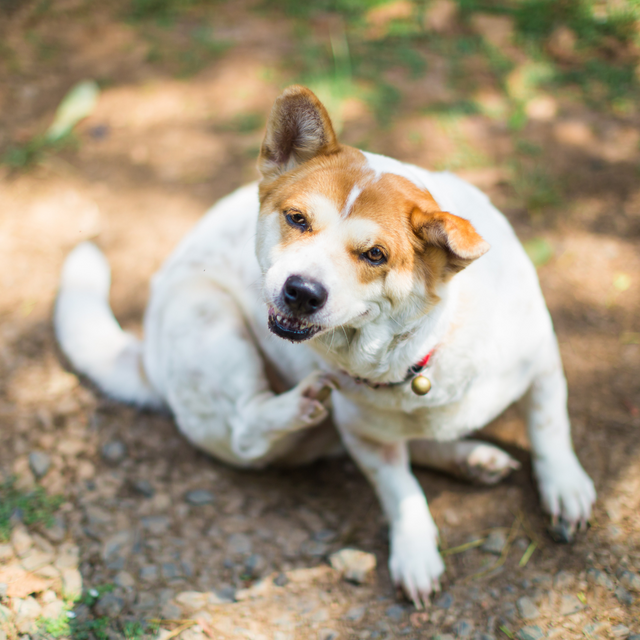
- Your dog is itchy elsewhere too: paws, face, armpits, belly or the base of the tail. Ears and paws together is a particularly common combination.
- The timing doesn't follow the seasons. Year-round problems can point to food, or to year-round environmental triggers such as house dust mites. Flare-ups that arrive every spring or summer point more towards pollen.
- There is a yeasty smell, or rusty-brown staining on the paws from licking.
- Head shaking or ear scratching that never fully stops, even between infections.
What else can cause recurring ear infections?
Before looking at diet, it is worth ruling out the alternatives. Some are quick to fix and some are urgent:
- Ear mites, particularly in younger dogs or recent rescues.
- A foreign body. A grass seed usually causes sudden, intense discomfort in one ear.
- Breed and ear shape. In the UK study above, breed and ear carriage were the biggest risk factors. Dogs with hanging ears had 1.76 times the odds of otitis externa compared with prick-eared dogs, and breeds at higher risk included the Basset Hound, Shar Pei, Labradoodle, Beagle and Golden Retriever. The authors also note that flat-faced breeds such as French Bulldogs and Pugs have been found to be at greater risk (O'Neill et al., 2021).
- Water. Dogs that swim or are bathed often can hold moisture in the ear canal.
- Hormonal conditions such as hypothyroidism or Cushing's disease, which weaken the skin's defences.
- Polyps or growths, which usually cause ongoing problems in one ear.
A vet can tell most of these apart by looking into the ear and taking a swab. It is worth asking for cytology (looking at the swab under a microscope), because knowing whether it is yeast, bacteria or both changes the treatment.
Can changing my dog's food stop ear infections?
A change of food will not treat an active ear infection. That needs veterinary treatment, which may include cleaning and medication applied in the ear or given by mouth.
What a diet trial can do is show whether a food allergy is the underlying cause. If it is, removing the trigger reduces the inflammation, and the infections that kept coming back have less reason to return.
The way to find out is an elimination diet based on a protein your dog has never eaten. A dog can't be sensitised to a protein it has never met. Most dogs in the UK will have eaten several of chicken, beef, lamb and fish by adulthood, which is what makes finding a novel protein harder than it sounds. Novel is not the same as allergen-free, though: any protein can cause a reaction.
How do I run a diet trial for ear problems?
With your vet, and carefully. A trial that isn't controlled won't give you an answer.
- One food only, for long enough. In a review of published trials, signs had settled in more than 85% of dogs with food reactions by five weeks on an elimination diet, and in over 95% by eight weeks (Olivry, Mueller & Prélaud, BMC Veterinary Research, 2015). Skin and ears take time to settle, so judge the trial at the end, not in the first couple of weeks.
- Nothing else to eat. Stop treats, chews and table scraps. Many flavoured medications, including routine flea and worming treatments and some supplements, contain animal proteins, so check with your vet about these before you start. They may be able to recommend unflavoured alternatives where appropriate.
- Keep treating the ears as your vet has directed while the trial runs. You are testing the underlying cause, not replacing the treatment.
- Keep a record of infections, head shaking and scratching. Improvement can be gradual enough that it is easy to miss without notes.
If the signs improve, your vet will usually suggest reintroducing the old food to confirm it was the cause. Our guide to hypoallergenic dog food explains elimination diets in more detail, and do carbohydrates feed yeast in dogs? covers the yeast side of the problem.
When should I see my vet?
Any active ear infection needs veterinary attention. Untreated ear infections can cause lasting damage to the ear canal and, in severe cases, affect hearing and balance. Get your dog seen urgently for sudden severe pain, a head tilt, loss of balance, discharge with blood, or an ear your dog won't let you near.
This article is about finding a possible underlying cause of recurring infections. It is not a treatment guide and doesn't replace an examination.
Where Grub Club fits
If your vet suggests an elimination diet, a complete food based on a single novel protein can form its base. Our complete foods use one animal protein, black soldier fly larvae, and contain no chicken, beef, lamb, fish, dairy, wheat or soya. In our customer survey, 84% of new customers had never fed their dog insect protein before joining us.
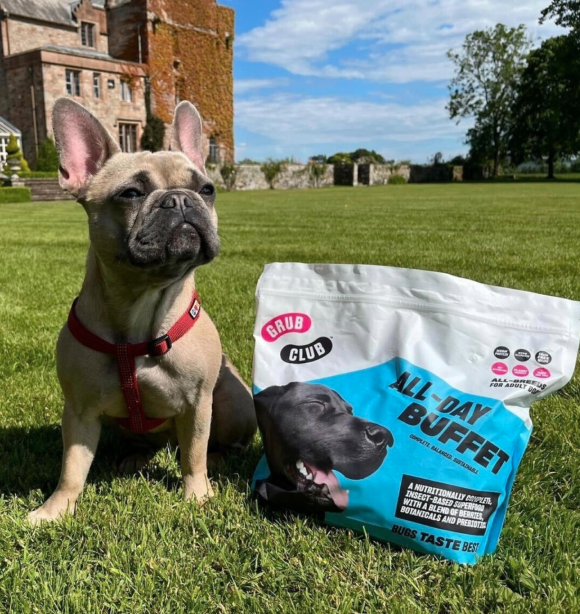
All-Day Buffet contains pea protein and potato; Good Gut Grub contains neither, which matters if your dog may react to them.
Our foods are not prescription diets and have not been clinically tested as a treatment for ear infections, food allergy or any skin condition. You can book a free consultation with our vet to talk it through.
References
- O'Neill, D.G., Volk, A.V., Soares, T., Church, D.B., Brodbelt, D.C. and Pegram, C. (2021). Frequency and predisposing factors for canine otitis externa in the UK: a primary veterinary care epidemiological view. Canine Medicine and Genetics, 8, 7. doi:10.1186/s40575-021-00106-1
- Olivry, T., Mueller, R.S. and Prélaud, P. (2015). Critically appraised topic on adverse food reactions of companion animals (1): duration of elimination diets. BMC Veterinary Research, 11, 225. doi:10.1186/s12917-015-0541-3