Moving a dog from raw food to a dry food like Grub Club is a bigger change than switching between two dry foods, so it usually works best done gradually, over one to three weeks depending on your dog. In the first couple of weeks, two things are common: your dog will probably drink more water, and there may be more to pick up in the garden. Both are expected and usually settle.
This guide covers why the change from raw is a bigger step, a transition plan to start from, what you might notice along the way, and the signs that mean you should slow down or speak to your vet.
Why is switching from raw to dry food a bigger change?
Three things change at once, and each can have a visible effect.
Moisture. Raw food is mostly water, usually well over half its weight. Dry food is around 8 to 10% moisture (All-Day Buffet is 8%). Your dog makes up the difference by drinking more, which is why the water bowl may empty faster. This is often the most obvious change in the first week.
Fibre. Raw diets are usually low in fibre. All-Day Buffet contains 4% crude fibre and Good Gut Grub 4.5%. Some types of fibre draw water into the bowel and add bulk, so your dog may pass larger or more frequent stools. Regular, formed stools are generally a sign of a digestive system that's working, and the change can be a good sign rather than a worry.
Gut bacteria. The bacteria in your dog's gut are adapted to what they have been eating. With a new protein and fibre profile, some changes happen within days and others can take a few weeks to settle. During that time your dog may have a little more wind, which usually settles.
How do I switch my dog from raw to dry food?
Replace a portion of the raw food with the new food, rather than adding it on top, so the total amount your dog eats stays about the same. This plan is a starting point, not a rule. Some dogs, particularly those with a sensitive stomach, do better with a slower change, so let your dog's response guide the pace.
| Stage | Most dogs | Slower (sensitive stomachs) |
|---|---|---|
| 25% new food | Days 1–3 | Days 1–6 |
| 50% new food | Days 4–6 | Days 7–12 |
| 75% new food | Days 7–9 | Days 13–18 |
| 100% new food | Day 10 onwards | Day 19 onwards |
Two things make the biggest difference:
- Drop back rather than pushing on. If stools become loose, go back to the previous stage and hold there for a few more days before moving forward again.
- Change one thing at a time. New treats, new chews and a new food all at once make it impossible to tell what caused what.
Feeding measured meals at set times, rather than leaving food down all day, can also help.
What should I expect in the first week?
- More drinking. Expected, and not a concern on its own. Keep fresh water available at all times.
- More frequent stools. A modest increase is common. They should still be formed: you should be able to pick them up cleanly.
- More wind, especially early on, while your dog's gut adjusts.
- Some hesitation at the bowl. Raw-fed dogs are used to a strong smell and a soft texture. See below if this is your dog.
How long until my dog settles on the new food?
It varies from dog to dog, and dogs coming from raw can take longer than dogs switching between dry foods. Over the following weeks, you would expect water intake to settle at a new normal, stools to become predictable and wind to ease.
If you switched to address a skin or gut problem, give it time. Skin in particular is slow to change, and the first couple of weeks of a transition tell you very little either way. For more on stool changes after a switch, see why is my dog pooping more after switching food?
What if my dog won't eat the new food?
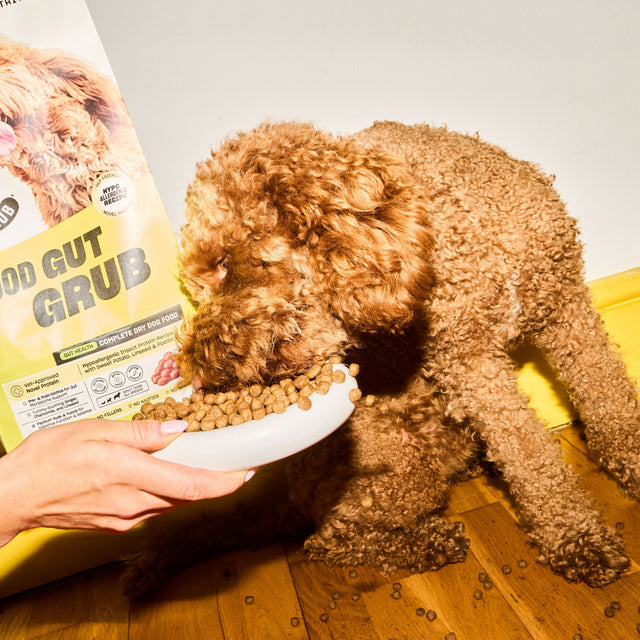
Raw-fed dogs often take a few days to accept dry food, because the smell, temperature and texture are all different. It is usually a matter of days, not a verdict. These steps help, in this order:
- Slow down. Go back to 25% new food and hold there for several days.
- Add warm water and leave it for a minute or two. This softens the kibble and releases more aroma, and smell matters a lot to dogs.
- Use a topper from within the diet, such as a spoonful of our wet food or Top Dog All-In-One, rather than something new from outside it. If your dog is on an elimination trial, check with your vet before adding anything, including our own toppers.
- Take the bowl away after about fifteen minutes and don't leave food down between meals.
- Check the amount. An overfed dog isn't hungry. All-Day Buffet contains 350 kcal per 100g, so if you have been matching your dog's raw food by weight rather than by calories, you may be offering too much. The feeding guide on the All-Day Buffet page gives a starting amount.
If none of that works after a week or so, get in touch. We would much rather help you make it work than have you give up on it.
Is cooked dog food less nutritious than raw?
It is a fair question if you have been feeding raw. Our dry food is cooked during manufacture: steamed under pressure at 120°C for one to two minutes, then cooked at 130°C for twenty minutes. The recipes are formulated as complete foods to meet FEDIAF nutritional guidelines, which means they are designed to provide every essential nutrient, including amino acids, fatty acids, vitamins and minerals, at the recommended levels in the finished food.
Raw feeding done well works for a lot of dogs. People usually move away from it for practical reasons, such as cost, storage, travel, or someone in the household who shouldn't handle raw meat, or because a skin or gut problem hasn't resolved. None of those mean anyone was wrong about raw.
What if I'm switching as part of an elimination trial?
Then the trial needs to be carefully controlled, ideally with your vet. Your dog should eat the chosen food only, with no treats, table scraps or chews. Many flavoured medications, including routine flea and worming treatments and some supplements, contain animal proteins, so check with your vet before you start. They may be able to recommend unflavoured alternatives where appropriate.
Judge the trial at the end, not in the first fortnight. In a review of published trials, signs had settled in more than 85% of dogs with food reactions by five weeks on an elimination diet, and in over 95% by eight weeks (Olivry, Mueller & Prélaud, BMC Veterinary Research, 2015). Our guide to hypoallergenic dog food explains elimination diets in more detail.
When should I see my vet?
If your dog has watery stools lasting more than 48 hours, blood in their stools, repeated vomiting, straining, lethargy or any unexplained weight loss, these signs need a veterinary appointment rather than a change to their food. Mucus in the stools can be a sign of irritation or inflammation in the bowel and is also worth discussing with your vet.
Some weight change is expected if the new food has a different calorie density from the old one, but a dog that is losing weight and seems flat needs examining rather than a feeding adjustment. Drinking a lot more than usual long after the transition has finished is also worth mentioning to your vet.
Where Grub Club fits
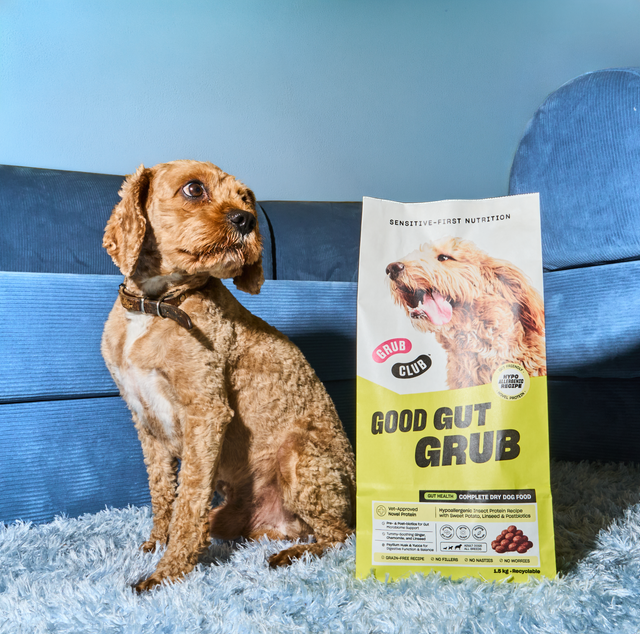
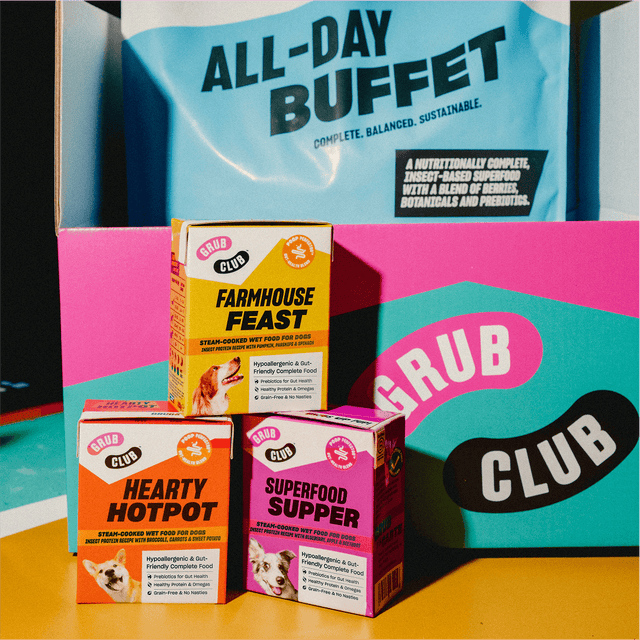
All-Day Buffet is our everyday complete dry food. Good Gut Grub is formulated for sensitive digestion and contains no pea or potato, which can make it a better starting point for a dog with a sensitive stomach. Both use one animal protein, black soldier fly larvae.
Insect protein is well tolerated by dogs: in a 28-day trial of 56 adult dogs, black soldier fly diets were well digested, and blood chemistry, weight and stool scores stayed within normal limits (Freel, McComb & Koutsos, Journal of Animal Science, 2021). Our foods are not prescription diets, and if your dog is under veterinary care for a skin or gut condition, talk to your vet before changing their food.
References
- Freel, T.A., McComb, A. and Koutsos, E.A. (2021). Digestibility and safety of dry black soldier fly larvae meal and black soldier fly larvae oil in dogs. Journal of Animal Science, 99(3), skab047. doi:10.1093/jas/skab047
- Olivry, T., Mueller, R.S. and Prélaud, P. (2015). Critically appraised topic on adverse food reactions of companion animals (1): duration of elimination diets. BMC Veterinary Research, 11, 225. doi:10.1186/s12917-015-0541-3